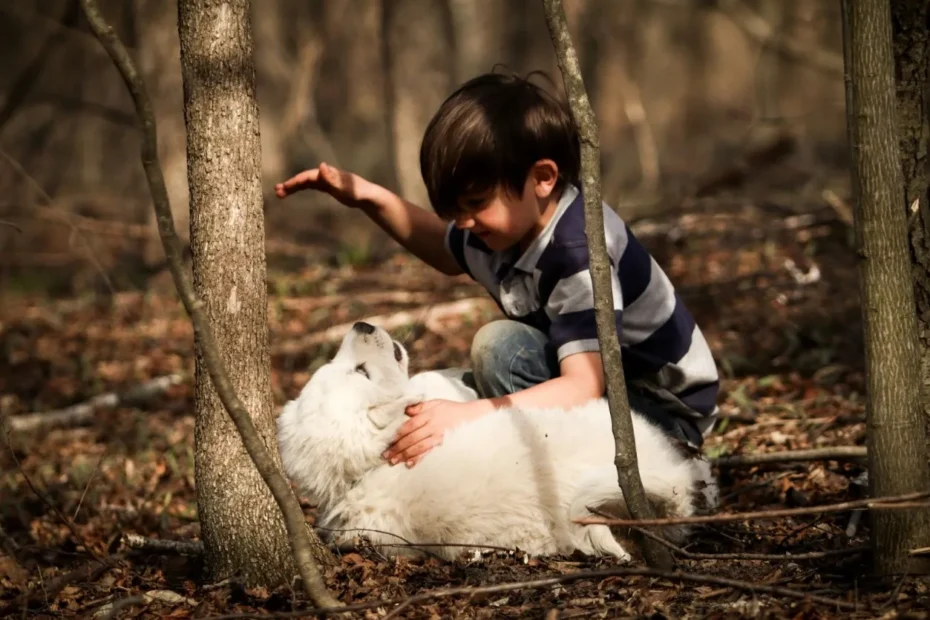
For most parents, there’s a scene in which they’ve found themselves quite familiar. You’re at your friend’s house with your child, and all of a sudden, a dog trots up to you with wagging excitement – your child starts to cry or runs behind you. Perhaps it’s a cat at your Grandma’s house. Maybe it’s a rabbit at the petting zoo, or even a bird in the backyard. Each of these animals are harmless to the child – but to your child, they may seem like monsters of the small world they know.
Such fear of animals is a common fear among children – many parents do not realize how common this fear is. However, with the appropriate approach to helping your child with their fears, the majority of children will overcome their fear of animals – turning them into the animal lovers that they can be in the future.
Why Are Some Children Scared of Animals?
Before you can help your child, it helps to understand where the fear comes from.
A past experience. Even the most seemingly-minor of these threats to the child — such as a dog jumping up on them, a cat scratching at them while they play, or a bird that happens to fly too close — can leave a lasting impression on their nervous systems during this time of their lives.
The unknown. It’s true that most children are cautious about the unknown. Animals behave in ways that humans find unpredictable and bizarre in terms of social rules and behaviors. For a toddler or young child, this can be scary.
Learning from others. Children are incredibly perceptive. If an individual who a child knows and loves exhibits fear of an animal, even if the child has no experience with that animal creating negative experiences for that individual, the child will exhibit the same behavior and form the same fears.
Sensory sensitivity. Some children — especially those with sensory processing differences — may find certain animals to be overwhelming due to their smell, texture, movement, or noise.
Whatever the cause of your child’s specific phobia of animals, their fear is very much real to them — and it deserves to be taken seriously.
What Not to Do
Well-meaning parents sometimes respond to animal fear in ways that accidentally make things worse. Here are a few common pitfalls to avoid:
Don’t force contact. Pushing a frightened child toward an animal — even a gentle one — can deepen the fear and damage trust. “Just pet it, it won’t hurt you!” rarely works, and it sends the message that their feelings don’t matter.
Don’t minimize the fear. Saying “don’t be silly” or “there’s nothing to be scared of” dismisses what your child is experiencing. Instead, acknowledge it: “I can see you’re feeling a bit scared. That’s okay.”
Don’t overreact yourself. If you rush to scoop your child up every time an animal appears, you may inadvertently confirm that there is, in fact, something to be scared of. Try to stay calm and model confidence.
Practical Steps to Help Your Child
1. Start With Conversation
Ask your child questions about the animal while you are in a low-pressure environment. Ask them what it is about the animal that makes them feel fear. Is it the sound the animal makes? Is it the size of the animal? Are they fearful of what the animal might do to them? Understanding their specific fear of animals will allow you to better address it for them.
Additionally, there are many books, documentaries (aimed at young children), and even YouTube videos about friendly animals that will help children feel more familiar with animals before they encounter them in person.
2. Take It Step by Step
Exposure therapy is one of the most effective treatments for childhood anxiety. Exposure therapy involves gradually exposing children to their fears. It is important to note that this is a gradual process — there’s no rush.
One approach is to start from a distance. For instance, if the child is fearful of animals, allow the child to observe the animal from across the room. Gradually reduce the distance over time — again, at the child’s pace, not the parent’s.
3. Let Your Child Be in Control
Fear comes from feeling out of control. By giving your child a sense of agency in the situation, you give them a sense of control over their environment. Allow them to decide whether or not to move closer to you. Allow them to decide whether or not to hold out their hand.
4. Use Calm, Familiar Animals
Not all animals are the same, and not all breeds have the same energy. If you’re looking for breeds that are gentle, patient, and well-suited to family life — including families with nervous children — the Border Terrier, Labrador Retriever, Golden Retriever, and Cavalier King Charles Spaniels are worth looking into.
5. Praise Every Small Step
Positive reinforcement is powerful. When your child manages to stay in the room with an animal, or watches calmly from a distance, or takes a tiny step closer — acknowledge it. “I noticed you stayed really calm when the dog walked past. I’m really proud of you.” Small wins build momentum.
6. Consider a Family Pet
While it may sound counterintuitive, having their very own pet can actually be the most effective way of overcoming the fear of animals entirely. By feeding and caring for the pet themselves, the children will form a relationship with the animal that is based upon familiarity and trust rather than fear of the unknown and the fearful reactions that those children have towards animals in general.
When to Seek Extra Support
In most cases, all it takes is time and patience from the parent. But if the case is more severe for your child, or if the phobia is impacting their life significantly, or if their phobia shows no signs of improvement, it may be worth speaking to a child psychologist or counselor about treating the zoophobia your child suffers from.
There is no shame in seeking help from a professional. In fact, it is one of the most loving things a parent can do for their child.
The Bottom Line
A child who is scared of animals isn’t broken, difficult, or being dramatic. They’re simply a child who is cautious about the unknown. Your job isn’t to eliminate the fear altogether, but to walk alongside them as they find their own courage.
More often than not, the child who was terrified of dogs as children will grow up to be the adult who can’t imagine life without one.