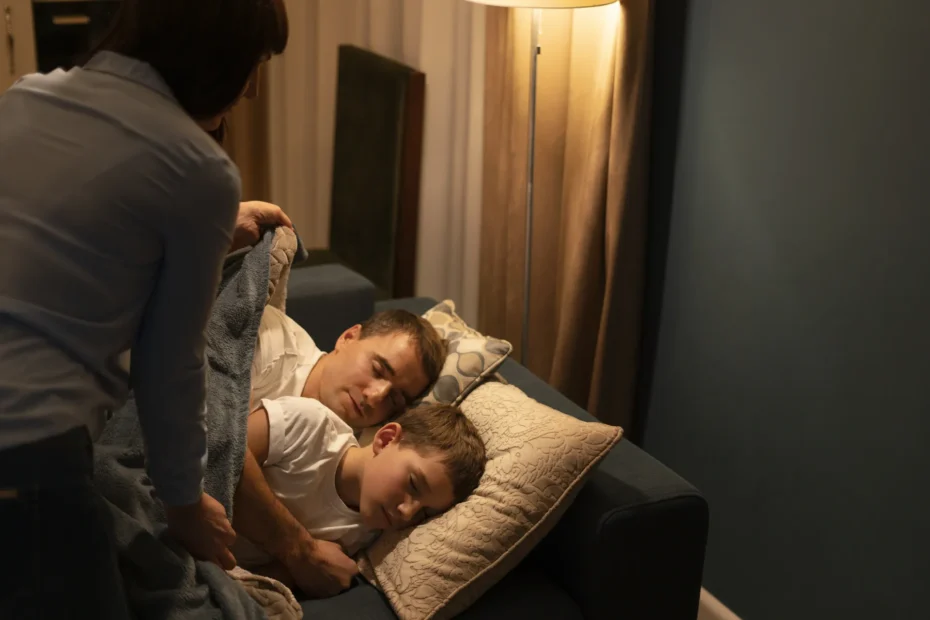
Bedtime can feel routine: brush teeth, read a story, lights out. But if you pause for a moment, you might notice small things that don’t quite fit. Maybe your child snores more than expected, tosses and turns, or wakes up with wet sheets even after years of dry nights.
It’s easy to assume these are just phases. And often, they are. But sometimes, when a few of these signs show up together, they can point to something worth a closer look.
In this article, we’ll walk through:
- Subtle bedtime signs many parents overlook
- How different sleep behaviors can connect
- When it might be helpful to pay closer attention
Some bedtime behaviors are easy to brush off
Most parents notice little quirks at bedtime. A child might snore lightly, kick off the blankets, or shift positions all night long. These moments can seem harmless, especially if your child falls asleep quickly and stays in bed.
Over time, though, these small behaviors can form patterns. You might realize your child always seems restless or wakes up looking tired. It’s not always obvious right away.
Many parents normalize these signs because they don’t seem urgent. Kids grow, routines change, and sleep can be unpredictable. It’s natural to assume things will settle on their own.
Still, when these habits show up night after night, it can help to step back and look at the bigger picture. That kind of awareness is part of the practical parenting support many families rely on every day.
Sleep quality matters more than time in bed
One could just be preoccupied with the amount of time that your child sleeps. When they receive 9 to 10 hours, they think that all will be well. It is not only the time that matters with sleep, but the restfulness of that time.
A child may spend all night in bed and not get refreshed in the morning. You may find that they are difficult to wake up, slow in getting ready, or are strangely grumpy in school.
Experts often point out that healthy sleep is about both duration and quality. Resources like healthy sleep habits for children explain how consistent, uninterrupted sleep supports mood, focus, and energy levels.
When sleep quality isn’t quite right, the effects tend to show up during the day. Trouble focusing, emotional ups and downs, or constant fatigue can all be part of the picture.
Snoring and mouth breathing can signal deeper issues
It may occur occasionally with snoring, particularly at the time when there is a cold or allergy season. However, when your child snores habitually, then it might be worth listening more.
One of such signs is snoring, which is easy to disregard, as it does not always appear to be serious. However, snoring may occasionally indicate difficulties in breathing in bed, especially when it is frequent or loud.
You may also find your child sleeping with his mouth open or changing positions frequently at night. These tendencies can be related to the ease with which they can breathe during sleep.
According to sleep apnea in children, disrupted breathing at night can affect sleep quality and overall well-being. That doesn’t mean every snore is a problem, but it does mean patterns are worth noticing.
Some children even adopt unusual sleeping positions, like tilting their head back or curling into certain shapes, to help themselves breathe more comfortably.
Bedwetting can sometimes be part of the bigger picture
Bedwetting is a delicate issue among people. It is normal, particularly among young children, and it has little to do with something being wrong. It is just a part of growing up, in the case of most children.
However, in some cases, bedwetting may be part of a more significant phenomenon, as long as it occurs later in life or also coincides with the additional indicators of sleep disturbances. It is there that one can find it useful to see the big picture.
For example, some children who sleep very deeply may have difficulty waking when their body signals the need to go. Others may experience sleep disruptions that affect how their body regulates nighttime functions.
There’s also growing awareness around why bedwetting can overlap with sleep-disordered breathing, especially when it appears alongside snoring, mouth breathing, or restless sleep.
It’s important to approach this gently. Bedwetting is never something a child is doing on purpose, and stress or pressure can make it harder for them to improve. At the same time, parents often carry a quiet emotional load trying to figure out what’s going on, something many relate to in conversations about the mental load of motherhood.
Looking at patterns can help you decide the next steps
One of the most helpful things is simple observation, as you do not know what is regarded as a normal thing and what is not. You do not have to have a sophisticated system; just a mere perception of what is happening in the long term.
First of all, you can see how common some behaviors are. Is it nighttime snoring or just a few cases of snoring? Waking up in the mornings? tired? Is bed wetting a habitual or an occasional experience?
Some parents find it helpful to jot down a few notes for a week or two. Patterns tend to become clearer when you see them laid out over time.
Daily routines can also play a role. Things like consistent mealtimes, calming evening activities, and connection moments, like those highlighted in family dining traditions, can support better sleep habits overall.
If patterns start to stand out, it can be a good time to bring them up with your child’s pediatrician. You don’t need to have all the answers; just sharing what you’ve noticed is a strong first step.
Small observations can lead to better sleep for everyone
Bedtime is no different. The symptoms we have discussed, snoring, troubled sleeping, breathing with the mouth, and even bedwetting, do not necessarily indicate that there is anything wrong. But when they are present jointly, they can provide valuable hints.
Paying attention doesn’t mean worrying. It simply means staying curious and open to what your child might be experiencing.
Over time, those small observations can lead to better conversations, better support, and better sleep—for your child and for you.